
In the world of technical diving, every dive is a mission that demands precision, teamwork, and trust. I’ve seen divers train for months to master decompression schedules, redundant systems, and complex gas mixes, but what truly makes a tec operation run safely isn’t just individual skill, it’s the presence of a Safety Diver.
This diver is the silent guardian who ensures that everything from gas checks to team positioning runs smoothly. As someone who’s spent years coordinating tec dives in Brazil and Roatan, I’ve come to see that a strong Safety Diver can turn a high-risk mission into a calm, efficient, and controlled operation.
What Exactly Does a Safety Diver Do in Technical Diving?
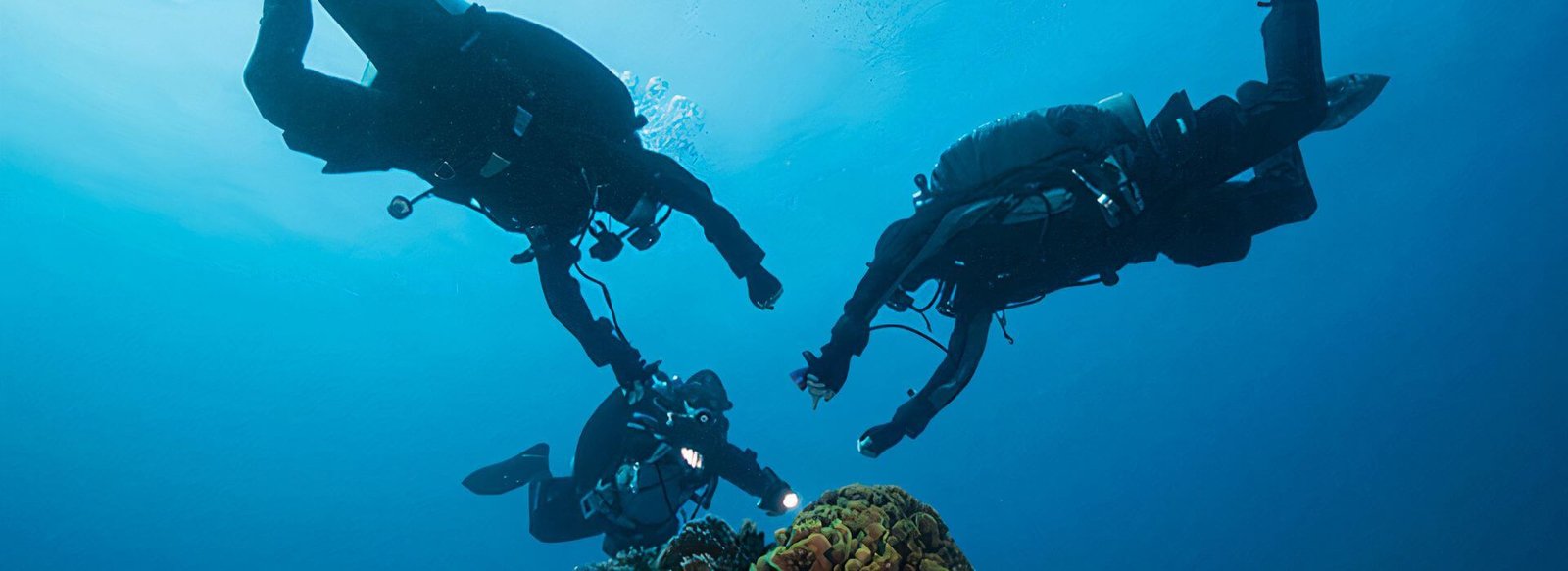
A Tec Safety Diver can be a Rescue Diver or another Tec Diver who supports the team from shallower depths or the surface. On most dives, especially those going down to about 65 meters (215 feet), decompression stops begin within recreational depths. This allows a qualified Rescue Diver to act as a Safety Diver, staying close, monitoring the team, and ready to help if something goes wrong, but without ever interfering with the planned procedures.
Think of the Safety Diver as the bridge between surface support and the deep team. They keep an eye on timing, observe gas switches, and prepare oxygen for decompression. They are not there to lead or rescue in every situation, but to prevent issues before they happen
Why Is This Role So Important in Tec Diving?
In tec diving, we plan everything to the minute, yet the ocean doesn’t always care about our plans. The Safety Diver provides that crucial extra layer of awareness.
In one dive I supervised off the north side of Roatán, I was finishing my decompression stops when one of my regulators went into freeflow, quickly draining my main deco gas. Before I even had time to signal, our Tec Safety Diver realized what was happening, grabbed the backup tank, and brought it to me. That quick action allowed me to complete every deco stop as planned without any issues. It was a simple reminder that, even with perfect planning, things can go wrong underwater, and having a competent Safety Diver makes all the difference.
The truth is, every successful tec dive depends on calm coordination, not heroics. A good Safety Diver must know when conditions, team readiness, or even gut feeling signal that a dive shouldn’t continue. Making that call takes judgment and humility, qualities that come with experience. I often remind divers to trust their instincts, something perfectly illustrated in Calling the Dive by DAN, an excellent article about recognizing when to stop before problems begin.
What Are the Main Responsibilities of a Tec Safety Diver?
The responsibilities of a Safety Diver start long before anyone gets in the water. They verify equipment configurations, check gas mixes and MOD labels, and confirm that every cylinder is analyzed and properly marked. During the dive, they monitor team positioning, ascent rates, and decompression stops while staying ready to assist at any point.
To be truly effective, a Safety Diver needs to understand gas management. I often recommend pairing the Blender Nitrox course with Tec Safety training because it helps divers understand the importance of oxygen handling and proper gas blending — knowledge that can make all the difference during tec operations.

What Skills Make a Great Tec Safety Diver?
Being a good Safety Diver isn’t just about confidence; it’s about awareness. You need to communicate clearly, maintain perfect buoyancy, and know how to position yourself without getting in the way.
During the Tec Safety Diver course, I focus heavily on real-life drills. Students learn to react to missed gas switches, entanglements, and simulated emergencies. We train in both sidemount and backmount configurations so divers can adapt to any setup. What I love most is seeing that shift in mindset — when divers start thinking like a team, not just as individuals.
How Can You Become a Certified Tec Safety Diver?
If you’re already a Rescue Diver or a Tec 40 diver preparing for deeper challenges, you’re closer than you think to becoming a Safety Diver. The course focuses on awareness, anticipation, and calm decision-making rather than depth or speed.
You’ll learn emergency protocols, surface oxygen delivery, and dive tracking techniques while supporting real tec dives within 30 meters (100 feet). Most divers begin their journey with Tec 40 to build a solid foundation, then continue into the Tec Safety Diver course to refine their observation and support skills.
This specialty is particularly close to me because I wrote it for PADI as a Distinctive Specialty. That means I’m currently the only instructor in the world who can teach it. If you’re serious about learning how to operate safely and effectively as part of a technical diving team, this is your opportunity to train directly with the person who designed the program itself.
The truth is, every successful tec dive depends on calm coordination, not heroics. A good Safety Diver must know when conditions, team readiness, or even gut feeling signal that a dive shouldn’t continue. Making that call takes judgment and humility, qualities that come with experience.

Why Should You Consider Becoming One?
Every technical dive relies on trust, and the Safety Diver is the person everyone else trusts most. They are not always the ones who go deepest, but they’re the reason the team returns safely every time.
Moments like that are exactly why I created the Tec Safety Diver course. This specialty was designed to teach divers how to think clearly under pressure, anticipate problems before they arise, and act with precision when it matters most.
Have you ever experienced a situation underwater where teamwork made all the difference? I’d love to hear your story, share it in the comments below and let’s start a conversation about what makes great safety partners in tec diving.
Ready To Become The Diver Every Tec Team Trusts?
Learn to think ahead, stay calm under pressure, and support your team with confidence. The Tec Safety Diver course, written and taught exclusively by me, will give you the mindset and skills that keep every tec mission safe and efficient.
Learn How to Support Every Tec Team